
A heritage style Defender is not just a Defender that looks old. It is a build that respects the original vehicle’s purpose and proportions, while removing the classic pain points that made ownership hard. Done right, it feels timeless and usable. Done wrong, it feels like a retro costume with expensive parts.
In a market where “heritage” gets used loosely, here is what actually defines a true heritage style Defender.
It starts with proportions, not add ons
The Defender’s identity lives in its geometry: flat planes, upright glass, short overhangs, and a simple, functional silhouette. A real heritage style build protects those relationships. If the truck looks correct from 30 feet away before you notice any accessories, you are on the right track.
Stance is everything
Heritage stance is balanced. Too high and the Defender looks top heavy. Too low and it loses its utilitarian character. The best builds dial in suspension tuning so the truck sits confidently at rest, rides well on imperfect roads, and still looks capable with passengers and gear onboard.
Heritage exterior details that make sense
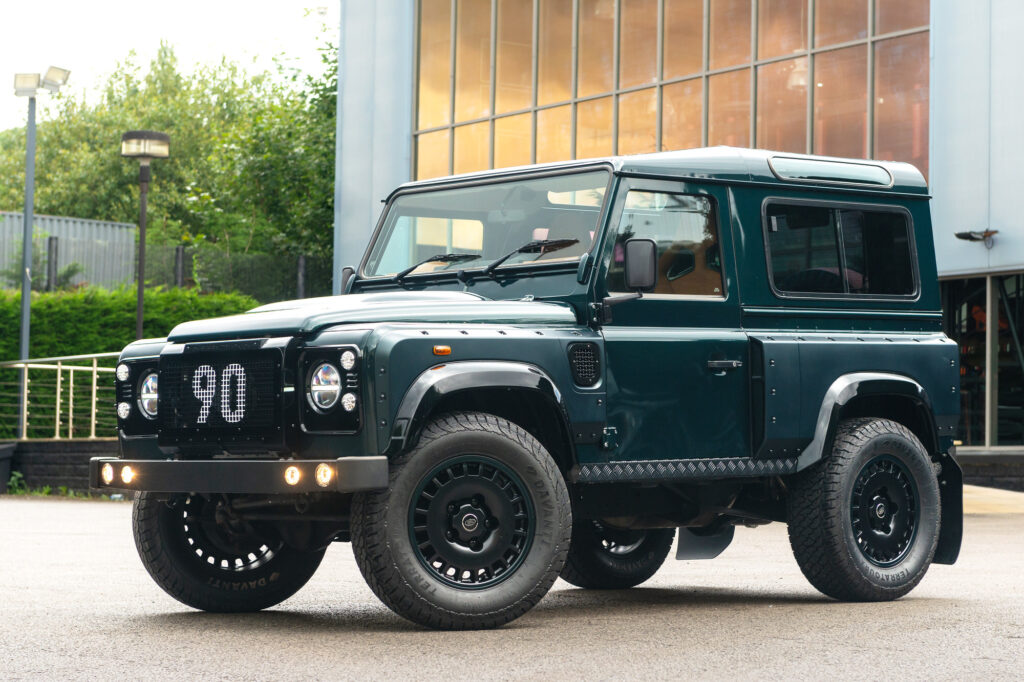
Heritage cues should feel functional and restrained, not cluttered. Common details that work when executed cleanly include:
- Period inspired lighting and simple grille treatments
- Steel wheels or classic alloys that suit the era
- Practical roof rack setups that are quiet and load rated
- Minimal badging and clean trim lines
What does not work is stacking accessories for visual noise without a clear purpose.
Interior: classic spirit, modern comfort
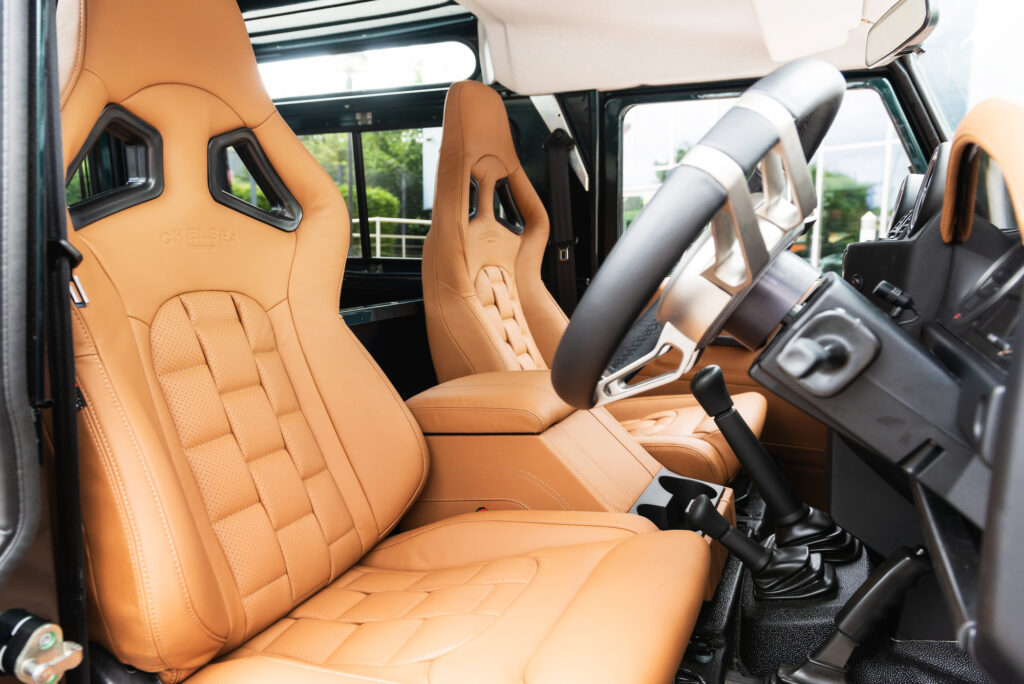
A true heritage style interior is not a museum. It is a place you can drive every day. The goal is to keep the upright, simple character of the cabin while upgrading comfort and usability.
That usually means:
- High quality materials that still feel durable and honest
- Modern HVAC, sound insulation, and seating that support long drives
- Tech that is integrated and useful, not dominant. Clean audio, navigation, and connectivity without turning the dash into a futuristic display wall
Powertrain choices that match the mission
Heritage does not require slow performance. Many owners want modern highway confidence and stress free driving. The key is cohesion: the drivetrain, gearing, cooling, and braking should feel like a system, not a collection of parts.
A heritage style Defender built for relaxed cruising will prioritize smoothness and low noise. A build intended for long range travel will prioritize torque, cooling capacity, and serviceability. Either approach can still be “heritage” if the vehicle stays balanced and true to its roots.
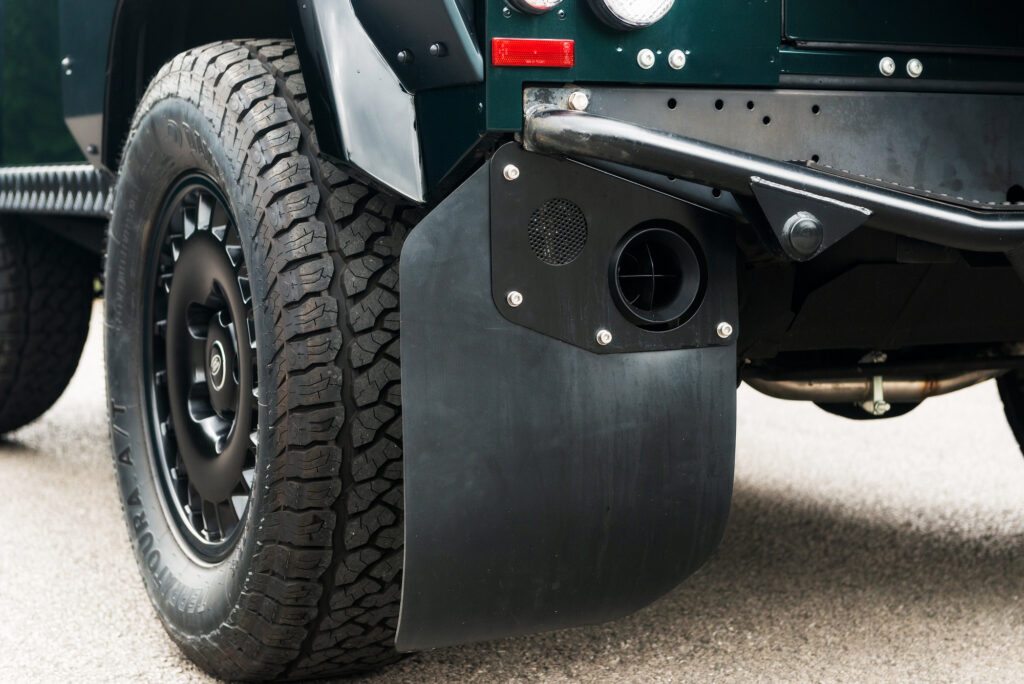
Craftsmanship is the difference between heritage and “retro”
Because the Defender’s design is simple and upright, sloppy work is obvious. A real heritage build has:
- Consistent panel alignment and clean shut lines
- Thoughtful hardware and trim choices
- Wiring and plumbing that look intentional
- Paint and finishing that holds up under close inspection
Heritage is about honesty. Premium craftsmanship supports that honesty.
Timeless color and finish choices
Heritage style often leans toward classic, understated colors because they reinforce the Defender’s timeless shape. Earth tones, deep neutrals, and period inspired shades tend to fit best. Bright modern colors can work, but they require restraint elsewhere so the truck still feels coherent.
Avoid “too much”
The quickest way to lose heritage credibility is stacking trends: oversized wheels, aggressive aero add ons, loud graphics, or multiple competing styles. Heritage is a discipline. It is the confidence to keep the design simple and let proportions and stance carry the presence.
A quick buyer checklist
When evaluating a heritage style Defender, ask:
- Does it look correct before you notice the details?
- Is the stance balanced and purposeful?
- Do the accessories feel functional and restrained?
- Does the interior feel classic in spirit but modern in comfort?
- Do the mechanical upgrades feel integrated?
- Does the finish quality match the price?
Bottom line
A true heritage style Defender is defined by proportion, stance, restraint, and craftsmanship. It honors what made the Defender iconic, then reimagines the ownership experience with modern comfort and reliability. When those pieces align, the truck does not just look classic. It feels timeless.
Where buyers get burned
Most disappointments come from two issues: poor planning and poor execution. Planning means defining how you will use the Defender before choosing wheels, tires, power, and accessories. Execution means verifying the builder’s workmanship with photos, documentation, and a clear parts list. Heritage style is not about hype. It is about making hundreds of small decisions that all point to the same timeless goal.
A note on authenticity
Authenticity is not about keeping everything old. It is about keeping the Defender’s purpose visible. When the build choices support usability and the classic silhouette stays intact, the result feels authentic even with modern power, modern brakes, and modern comfort.
If you keep coming back to words like balanced, timeless, and usable, you are evaluating it correctly. That is the core of heritage reimagined.